


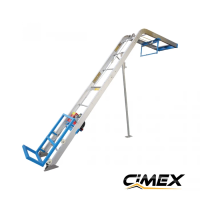
LIFTS FOR SOLAR PANELS AND CONSTRUCTION MATERIALS
Lifts for Solar Panels and Construction Materials
CIMEX lifts for photovoltaic panels and construction materials help raise suitable loads to the working level during installation and building work. The Bulgarian category presents aluminium and steel machines for moving panels and other materials on site. A material lift can reduce repeated manual handling, but its capacity, lift height, track arrangement and load carrier must match the actual job. It is lifting equipment, not a passenger lift: people must never ride on the load platform or travel with the materials.
The current Bulgarian catalogue shows specialised models for photovoltaic panels and construction materials. Compare each product's stated load limit, maximum working height, assembled dimensions, sections, power or drive arrangement and supplied carrier. Figures belong to the individual model and should not be applied to every lift in the category.
Where a material lift is useful
- Raising photovoltaic panels to a suitable installation level using the carrier and securing method specified for the lift.
- Moving compatible construction materials to elevated work areas where site layout allows safe installation of the lifting system.
- Reducing manual carrying on projects where repeated loads must reach a consistent height.
- Supporting roof, facade or renovation work when the machine, load and anchoring arrangement are appropriate.
These examples do not mean that every material can be lifted by every machine. Long, flexible or fragile items need special attention to support and restraint. Check the load dimensions, centre of gravity and the manufacturer's permitted uses before loading.
Aluminium and steel models
The Bulgarian description distinguishes lighter, easier-to-transport aluminium lifts from robust steel models intended for more demanding loads. Material alone does not determine the safe lifting capacity or the height of a particular machine. Compare the complete model specification, including weight, transport length, support arrangement and rated load at the planned configuration. Choose a machine that the crew can bring to the site, assemble correctly and position without obstructing access or emergency routes.
How to select the right lift
- Rated load: include the panel or building material, carrier, fixtures and any packaging that is lifted. Never exceed the stated limit.
- Lift height: allow for the actual unloading point and the machine's permitted working configuration, rather than using building height alone.
- Load size: confirm that panels, boards or other materials fit the approved carrier and can be secured as instructed.
- Site access: check gate and doorway widths, transport route, ground conditions and space for assembling the sections.
- Support and anchoring: follow the product manual for base support, stabilisers, slope limits and any required attachment to the building.
- Power and controls: verify the drive, supply, cable routing, emergency stop and the positions from which operators can observe the load.
Before purchasing, identify the heaviest and largest item, the lifting path and where it will be received. Check whether obstacles, overhead lines, scaffolding or roof edges affect the proposed setup. If the route cannot be kept clear and controlled, revise the lifting plan rather than improvising with the equipment.
Setup and safe operation
Only trained people should assemble and operate a lift. Inspect the frame, guides, fasteners, cable or lifting mechanism, controls and carrier before use. Set the machine on a suitable surface and install all specified supports or anchors. Keep the area below and around the load clear. Secure materials in the approved carrier and test the motion with a controlled initial lift before continuing to full height.
Do not stand beneath a suspended load or reach into moving sections. Stop work if the load shifts, the lift moves unexpectedly, wind affects a panel, or the machine makes an unusual sound. Solar panels present a large surface to the wind and can be damaged by poor handling; follow the panel manufacturer's handling instructions as well as the lift manual. Lower and isolate the machine before adjustment or clearing a fault.
Care and inspection
Clean debris from guides and load-bearing areas after work. Inspect wear points and replace damaged components only with parts approved for the model. Store sections and carriers so they cannot bend or be struck in transit. Keep the manual and inspection records available to the operating crew, and follow the applicable site rules for lifting equipment.
Frequently asked questions
Can the lift carry workers?
No. These are material lifts. Use properly selected access equipment for people.
Does an aluminium lift always have a lower capacity than a steel lift?
No general comparison is safe. Check the rated load and permitted configuration of the exact models being considered.
Can any solar panel be lifted without extra support?
No. Panel dimensions, fragility, wind exposure and the approved carrier determine the handling method. Confirm the plan for both lifting and receiving the panel.
Browse CIMEX lifts for solar panels and construction materials, then compare the model specifications with your load, height and site conditions. Share those details with the CIMEX team if you need help identifying a suitable machine.
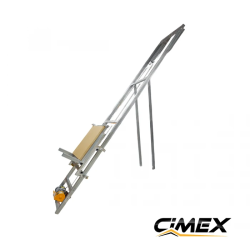
-250x250.png "Hoist for Photovoltaic Panels and Construction Materials CIMEX SL200 – 20m / 200kg")
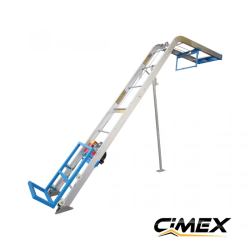
-250x250.png "Lift for construction materials and photovoltaic panels CIMEX PL200RS - 19m / 250kg")