


Rotary Hammers and Demolition Hammers for Construction
Rotary hammers and demolition hammers do different jobs on concrete and masonry. A rotary hammer turns its bit while delivering impacts for drilling holes; many models also offer a hammer-only setting for light chiselling. A demolition hammer or breaker drives a chisel without rotary drilling, concentrating its power on removal work. CIMEX.com lists compact rotary hammers alongside 11 kg electric and 23–27 kg petrol or electric breakers. Choosing between them starts with the work: drill an anchor hole, remove tiles, chase masonry, break a slab or demolish a larger concrete section.
Use a rotary hammer when the job includes drilling
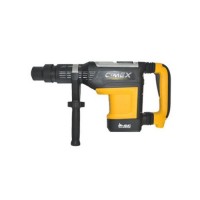
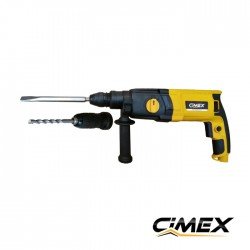
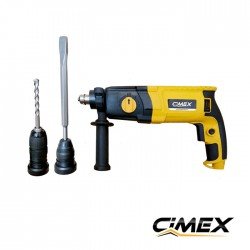
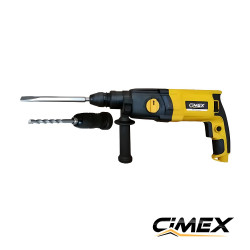
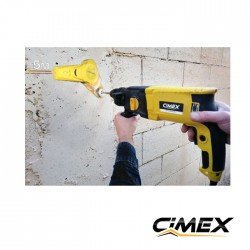
For holes in concrete and masonry, a rotary hammer combines rotation and percussion in the correct operating mode. The CIMEX HB3 is a compact SDS Plus model with a quick-change chuck option in its product listing. It can suit installation tasks that require both hammer drilling in masonry and ordinary drilling with the appropriate chuck and bit. The larger HB7 is listed as an SDS Max rotary hammer for more demanding impact drilling and chiselling. Always confirm the chuck system and the permitted bit diameter on the exact product page; SDS Plus and SDS Max accessories are not interchangeable.
Select the bit for the material and required hole size, and check the planned depth against the fastener specification. Before drilling, identify concealed electrical cables, water lines and reinforcement where relevant. Apply steady pressure without forcing the tool, clear dust from deep holes as instructed, and use suitable dust extraction and eye and hearing protection. If the task is mainly breaking concrete rather than making holes, a dedicated breaker may be easier to use and better matched to the workload.
Choose a breaker for hammer-only demolition
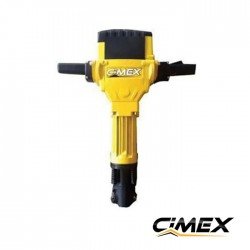
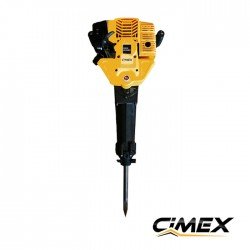
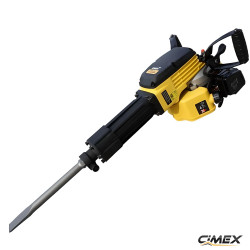
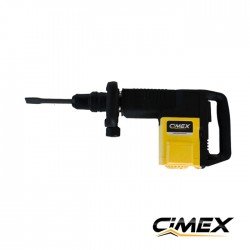
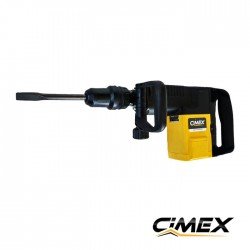
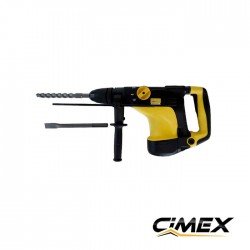
Demolition hammers use repeated impacts to drive pointed or flat chisels into concrete, brickwork and similar materials. They do not replace a rotary hammer for drilled holes because the working tool does not rotate in a drilling mode. The CIMEX HB11 is an 11 kg electric breaker for wall, foundation and renovation work. The heavier B27 electric breaker and GB23 petrol breaker address more substantial breaking tasks; the petrol model is useful where a suitable mains supply is unavailable. Match the chisel shank to the specific machine and choose the point or blade shape for the material and removal pattern.
Machine weight affects handling as well as impact. A compact tool is easier to position for overhead or confined work, while a heavy breaker is generally intended for sustained work on ground-level slabs or accessible structural elements. Weight alone is not a measure of output: compare impact energy, blow rate, power source, tool holder and the manufacturer's duty guidance. The Bulgarian category uses light, medium and heavy weight classes as a broad orientation, but the right machine depends on the surface, access and operator control.
Match the power source and accessories to the site
Electric rotary hammers and breakers need a supply and extension arrangement suitable for their rated load and the working environment. Protect cables from sharp rubble, traffic and water, and use the electrical protection required on site. A petrol breaker avoids an electrical cable but needs fuel handling and adequate ventilation; never run a combustion engine in an enclosed or poorly ventilated space. Consider noise restrictions, exhaust, transport and the time needed to refuel or reposition the machine.
Check what is included with each CIMEX model: chisels, bits, a case, an extra chuck or other accessories can vary. Use bits and chisels intended for that tool holder and replace worn or damaged tips. A blunt chisel often makes work slower and encourages excess force. The English category also includes packages pairing a rotary hammer with another site tool; review the individual package listing rather than assuming every accessory shown in a category image comes with a standalone hammer.
Plan controlled breaking and safe operation
Mark the area to be removed and check whether the structure contains reinforcement, services or load-bearing elements before starting. Where the work affects structural concrete, follow the project engineer's method and limits. Break material in manageable sections and keep a stable stance so falling fragments cannot strike the operator or nearby people. Do not use the machine as a lever to tear out large pieces; this can damage the tool holder and reduce control.
Wear appropriate eye, hearing, hand and respiratory protection, manage silica dust and take breaks consistent with the tool's vibration guidance. Keep bystanders clear, especially when chiselling above floor level. Switch off and disconnect the machine before changing an accessory or clearing a jam; let hot bits and chisels cool before handling. Compare the live CIMEX product specifications for drilling capacity, impact performance, weight and included equipment, then choose a rotary hammer or breaker that matches the actual material and duration of the job.
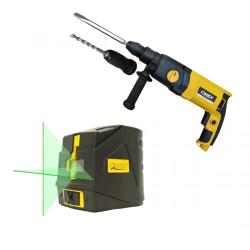
-250x250.jpg "PROMO PACKAGE! Rotary Hammer with Quick-Change Chuck 3 kg + Green Beam Line Laser Level")
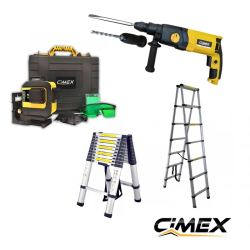
-250x250.png "PROMO PACK! Rotary hammer with quick-change chuck 3 kg + 3D laser level + Telescopic A-frame ladder")