

Measuring Wheels, Detectors & Pressure-Test Pumps
Measuring Equipment for Construction and Installation
Reliable measurements help you plan a layout, estimate materials, locate concealed services and check an installation before it goes into use. CIMEX offers laser distance meters and digital measuring wheels for distances that are awkward to measure with a conventional tape. The range also includes cable and material detectors and manual pressure-test pumps. Use this category to compare the instrument that fits your particular measuring or testing task.
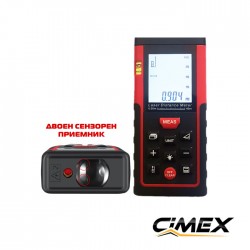
Laser distance meters for indoor layout
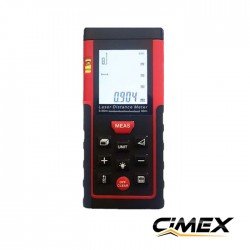
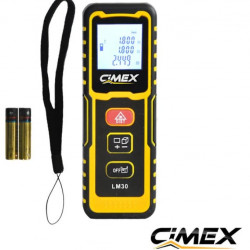
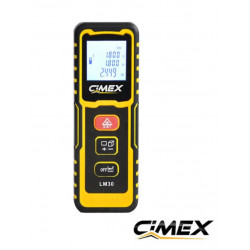
A laser distance meter, sometimes called a laser tape measure, is useful for checking room dimensions, ceiling heights, clearances and distances across spaces where holding a tape straight is difficult. Models such as the CIMEX LM30 and LM40 offer compact, handheld measurement. The LM30 product listing specifies a 0.05–30 m working range and distance, area and volume functions. Other models have different ranges and functions, so check each product page before choosing. Available ranges vary by model; the specifications of the individual product are the best guide.
For dependable results, measure from the correct reference edge of the device and ensure the laser spot lands on a suitable target. Bright light, reflective or dark surfaces and obstructions can affect readings. Take a second measurement when a dimension is critical. A laser distance meter helps with straight-line distances; it does not replace a measuring wheel for following a long route over the ground.
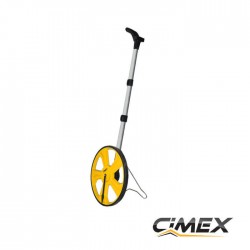
Digital measuring wheels for routes and larger sites
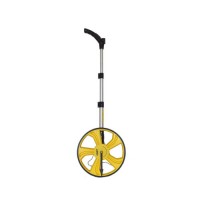
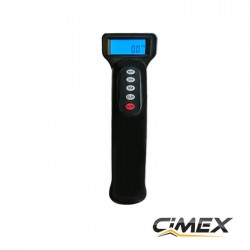
A measuring wheel, also known as a road measuring wheel, records the distance travelled as you roll it along a surface. It is useful for site paths, roadwork, landscaping, fencing runs and other longer routes that are impractical to check with a handheld tape. Digital wheels are built for longer routes than a handheld tape can conveniently cover. The CIMEX.com catalogue includes a 318 mm digital measuring wheel with a display. Compare wheel diameter, display, measuring range and storage features in the actual product listing.
Keep the wheel in contact with the ground and follow the intended route at a steady pace. Slipping, lifting the wheel or taking an unintended detour changes the reading. For a project with important quantities, mark the start and finish points and repeat the route to check consistency. The distance recorded is the travelled path; it is not automatically a straight-line survey measurement or a substitute for professional surveying.
Find concealed materials before drilling
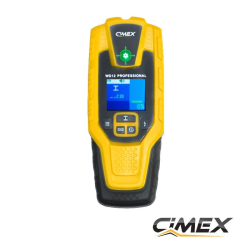
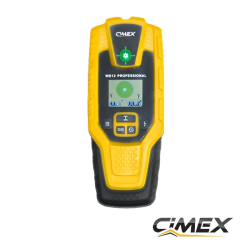
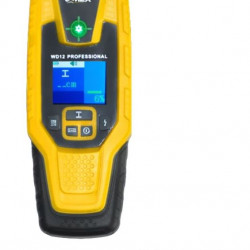
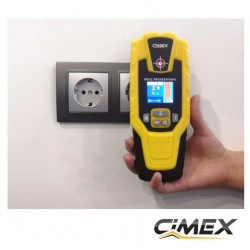
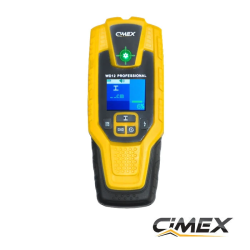
Construction and renovation often require checks before drilling, cutting or fixing into a wall. A detector can help identify some concealed electrical conductors and materials. The CIMEX WD12 Professional listing describes detection of ferrous and non-ferrous metals, steel, wood and electrical conductors. Detection depth and reliability vary with the material, wall construction and operating mode. Read the device instructions and scan the area more than once in the appropriate modes before marking a drilling point.
Do not treat a clear detector reading as proof that a wall contains no hidden service. Drawings, visual inspection and safe isolation procedures remain important, especially around electrical cables or pipework. Follow qualified trade practice when the consequences of drilling are significant.
Pressure-test pumps for pipe installations
Manual pressure-test pumps help check the leak-tightness of compatible pipework and systems after installation or maintenance. CIMEX.com lists hand-operated PT50 and PT60 pumps, with product titles indicating 50 bar and 60 bar respectively. These figures identify the models; they are not instructions to test every system at that pressure. Choose a pump that suits the required medium, pressure range and connection, and follow the pipe and component manufacturers' test procedure.
Before testing, inspect hoses, fittings and seals, fill or prepare the system as specified and remove trapped air where required by the procedure. Raise pressure gradually, watch the gauge and record the reading for the prescribed period. If pressure changes, investigate the cause safely; temperature effects and incomplete preparation can also influence a result. Never exceed the working limits of the weakest component in the system.
Choose the right tool for the result you need
Start with the job: use a laser meter for quick straight-line room dimensions, a measuring wheel for a longer ground route, a detector for checking a fixing area, or a pressure-test pump for a compatible installation. Then compare measuring range, resolution or accuracy, display readability, power supply, connection type and included accessories as relevant. The products serve different purposes, so one instrument cannot replace all the others. Review each CIMEX listing for current specifications and availability, and follow its operating instructions for safe, repeatable measurements.
-250x250.jpg "Cable Detector CIMEX WD12 Professional")
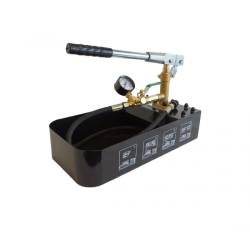
-250x250.png "Manual pressure testing pump 60 bar CIMEX PT60")
-250x250.png "Hand Pressure Test Pump 50 bar CIMEX PT50")
-250x250.jpg "Hand Pressure Test Pump 50 bar CIMEX PT50")
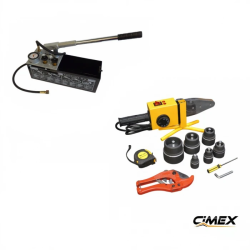
-250x250.jpg "Cimex Promo Kit for Testing and Soldering Plumbing Installations")