

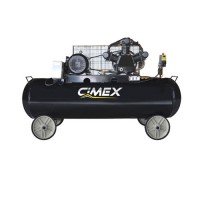
Air Compressors for Pneumatic Tools and Workshop Use
CIMEX air compressors supply compressed air for compatible pneumatic tools and equipment in construction, vehicle refinishing, furniture production, workshops and industrial work. The Bulgarian CIMEX category highlights single-phase and three-phase electric piston compressors, while the current English catalogue also lists mobile diesel screw compressors for higher-volume site applications. The right choice depends on the tool’s air demand, pressure, duty cycle and the power available where the compressor will run.
Electric piston and mobile screw compressors
Electric piston compressors, also called reciprocating compressors, use one or more cylinders to compress air into a receiver. They are suitable for many workshop tasks when the model’s output meets the connected tool’s demand. The CIMEX range includes compact receiver models as well as larger workshop units. Check the individual listing for motor power, voltage and whether the supply is single-phase or three-phase. A three-phase compressor needs a compatible installation; a normal single-phase socket is not a substitute.
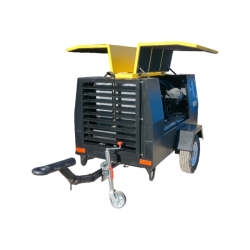
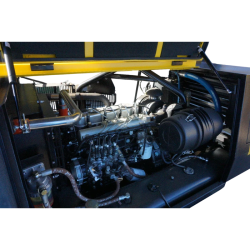
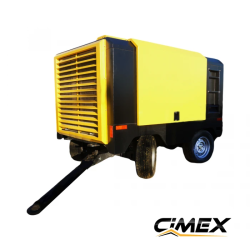
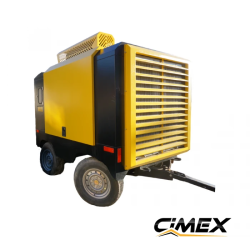
The catalogue also includes mobile diesel screw compressors for site work where high air delivery is needed. They differ from small receiver-based piston machines in scale, fuel supply and operating arrangements. Compare the stated flow at working pressure, transport needs and intended workload rather than treating all air compressors as versions of the same tool.
Understand pressure, air delivery and receiver size
Working pressure, usually shown in bar, must be high enough for the tool while remaining within the ratings of the hose, fittings and equipment. Air delivery, often shown in litres per minute or cubic metres per minute, describes the amount of air available over time. A product page may state an intake or displacement figure rather than free air delivery at the tool’s pressure, so check what the number means before comparing machines.
The air receiver stores compressed air and helps buffer short bursts of demand. Its capacity is measured in litres. A larger receiver can help with intermittent use, but it does not create more continuous output. If a tool consumes air faster than the compressor can replace it, pressure will fall and the motor may run continuously. Compare the actual tool demand and the compressor’s rated delivery and duty cycle, not receiver size alone.
Match the compressor to the application
List every tool expected to run, its required pressure and air consumption, and whether tools will operate together. For a nailer or short blow-off task, demand may come in brief bursts. Continuous sanding, spraying or other sustained pneumatic work needs a compressor able to support a longer load. When several tools share a supply, account for simultaneous demand, hose losses and the chosen operating pressure.
Painting and other finish-sensitive work may also need filtration and moisture removal. Compressed air can carry condensate or oil depending on the compressor and setup; match the air-treatment equipment to the finish and tool requirements. For outdoor construction work, consider how the compressor and hoses will be transported, protected and routed around the work area.
The Bulgarian source mentions a group of piston machines with 8 bar pressure, 184–477 l/min figures and 24–200 litre receivers. These are examples from that range, not specifications for every CIMEX compressor currently listed. Some current models and mobile screw units differ. Use each model’s live technical data for a final comparison.
Set up and maintain compressed-air equipment
Place an electric compressor where it has the ventilation and electrical supply required by its manual. Inspect the power lead, pressure controls, receiver, fittings and hose before work. Secure hoses against abrasion and trip hazards. Never exceed the rated pressure of an attached tool or accessory. Follow the model instructions for draining condensate from the receiver and for checking oil, filters or belts where fitted.
For a mobile diesel compressor, inspect fuel, fluid levels, filters and connections under the manufacturer’s schedule. Keep exhaust away from occupied spaces and follow site requirements for placement and noise. Before servicing any compressed-air system, isolate its power source and release pressure using the prescribed procedure. A damaged receiver or safety device needs professional attention, not an improvised repair.
Choose with clear specifications
Is receiver capacity the same as air output? No. It is stored volume; the compressor’s delivery determines how much air it can supply over time. Will any compressor run my pneumatic tool? Only if pressure and actual air delivery meet the tool’s needs at the intended duty cycle. Browse CIMEX piston and mobile screw compressor listings, then compare each model with the tools, power supply and work pattern you have.
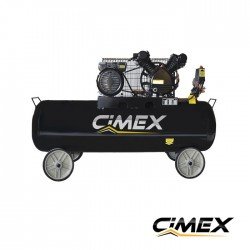
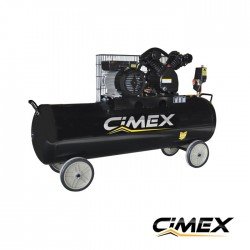
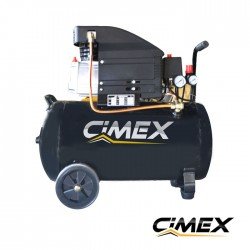
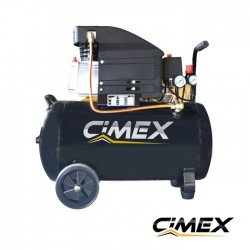
-250x250.png "Air Compressor CIMEX OMP50RS - 50 L, 400 L/min, 2.2 kW")
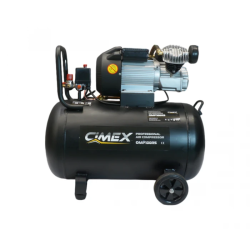
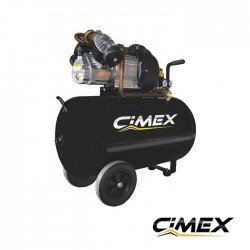
-250x250.png "Air Compressor CIMEX OMP100RS - 100 L, 400 L/min / 2.2 kW")
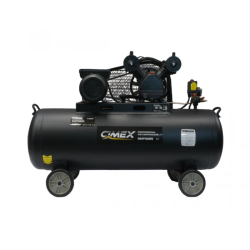
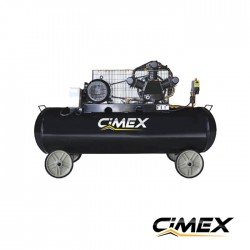
-250x250.jpeg "Air Compressor CIMEX OMP150RS - 150 L, 500 l/min / 2.2 kW")
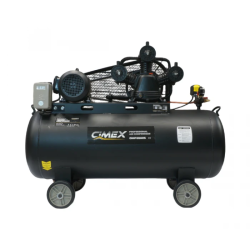
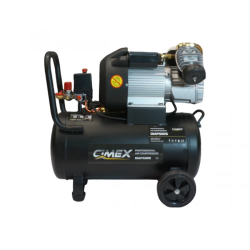
-250x250.png "Air Compressor CIMEX OMP200RS – 200 L, 720 L/min, 3.0 kW")