


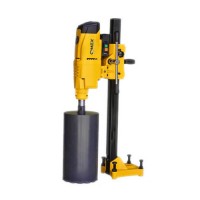
Diamond Core Drilling Machines for Concrete and Masonry
Core drilling machines cut circular openings with a compatible diamond core bit instead of breaking out the full area of a wall or slab. They are used to form passages for water and drainage pipes, electrical conduits, ventilation and other building services. The Bulgarian CIMEX category describes professional drilling in concrete floors and walls. The current English category also lists handheld drills, stand-mounted machines, drill stands, kits and diamond core bits. Match the complete drilling system to the material, hole diameter, position and site conditions before starting work.
Choose handheld or stand-mounted core drilling
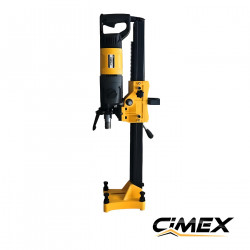
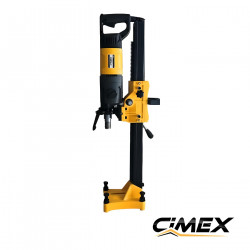
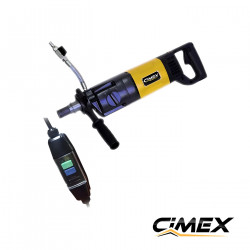
A handheld diamond core drill can be convenient for smaller, accessible openings when its model instructions permit hand operation. CIMEX lists the DCD165N handheld machine and a separate compatible stand, as well as a promotional DCD165N-and-stand package. These are different purchase options: do not assume that a standalone handheld drill automatically includes a stand. The specified maximum diameter can also depend on whether the tool is used handheld or on a stand, and on the material being drilled.
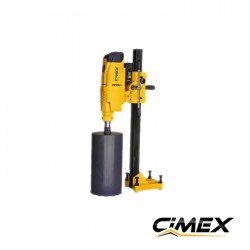
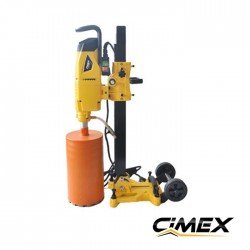
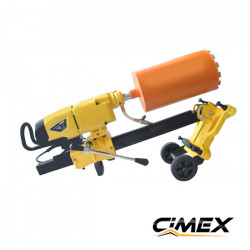
For larger openings, repeated work or a controlled vertical feed, compare stand-mounted machines such as CIMEX DCD230, DCD300 and DCD450. Their model names reflect different capacity classes, but the permitted bit size must be read from the relevant product and manual. The live DCD450 listing states a maximum drilling diameter of 450 mm, whereas the older Bulgarian category paragraph describes a range up to 350 mm. Select from the current model specifications rather than treating that older category figure as a limit for every product.
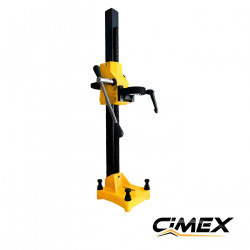
A stand helps keep the bit aligned and gives the operator controlled feed pressure. Check how the stand is fixed to the surface and whether anchors, vacuum mounting or another approved method is specified for the machine and substrate. A stand must be secured before drilling; its weight alone is not a fixing method. Confirm the working orientation, available clearance and the space required for the motor, carriage and water supply.
Match the diamond core bit and drilling method
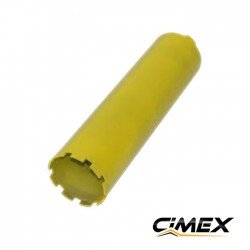
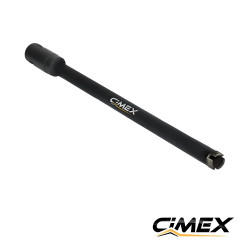
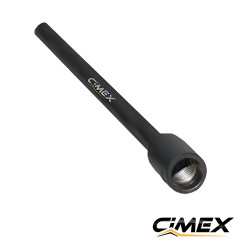
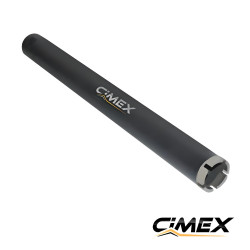
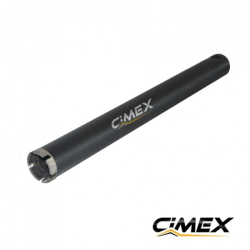
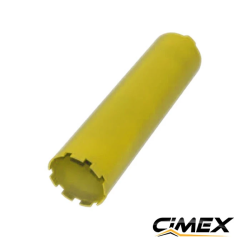
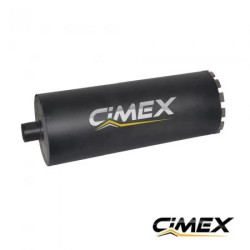
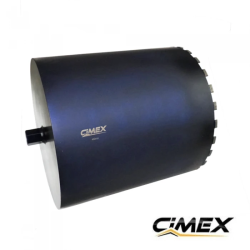
The bit diameter sets the hole size, while the bit length and usable drilling depth determine whether the opening can be completed in one pass. A 450 mm bit barrel listed in the catalogue is not a universal 450 mm drilling-depth rating for every machine and setup. Check the connection thread, motor spindle, bit segment, material suitability and maximum diameter together. CIMEX lists diamond core bits in many sizes, including products with UNC 1¼-inch connections; verify the exact connection and any adapter requirement for the chosen machine.
Wet core drilling uses water to cool the diamond segments and help carry slurry out of the cut. The DCD165N listing specifically describes use with wet-drilling bits. Provide the flow and electrical protection required by the tool manufacturer, and collect slurry before it damages finished surfaces or enters unsuitable drains. If a project requires dry drilling, confirm that both the motor and bit are approved for it and use the specified dust extraction. Do not change between wet and dry methods solely because a bit will fit the spindle.
Plan the opening before drilling
Mark the hole centre and check drawings, service routes and both sides of the wall or slab. Locate hidden electrical cables, water pipes and reinforcement where relevant, and obtain any structural approval needed for the opening. A core hole through a load-bearing element, waterproofing layer or fire-rated partition may require additional design and reinstatement. Ensure the core can be removed safely and cannot fall onto people or equipment below. Work from a stable position with the tool and power supply protected from water.
Begin the cut at the speed and feed recommended for the bit and material. Keep the drill aligned rather than forcing it sideways; excessive feed can stall the motor or glaze the segments. Watch for changes in resistance that may indicate reinforcement, a void or a service. Stop the machine and isolate power before freeing a jammed bit or adjusting the stand. Follow the product manual for residual-current protection, suitable personal protective equipment and maintenance checks.
Compare CIMEX core drilling equipment
Start with the required hole diameter and substrate, then compare machine capacity, handheld versus stand use, drilling orientation and wet or dry approval. Add the correct bit, stand or mounting kit, water supply and slurry collection to the plan. Check what is included in the chosen listing: the DCD165N drill, its separate stand and the combined package are not identical offers. Choosing the complete setup makes repeated concrete and masonry openings more accurate and helps avoid unsuitable bits or missing site equipment.
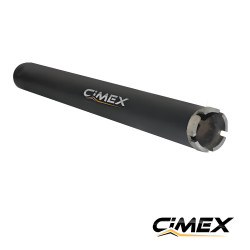
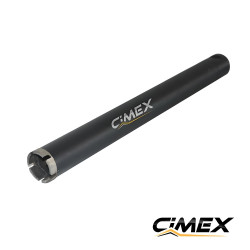
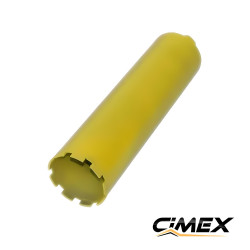
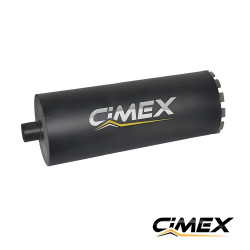
-250x250.png "Diamond Core Drill Bit for Concrete Φ 400x400 mm")