

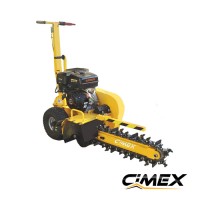
Trenching Machines for Utilities & Landscaping
Petrol Trenchers for Cable, Pipe and Irrigation Routes
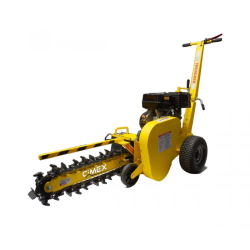
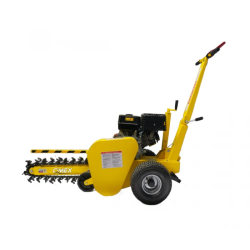
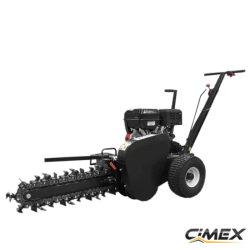
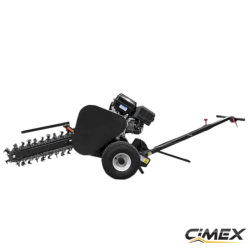
A trencher cuts a narrow channel in the ground for services that need to run below the surface. The Bulgarian CIMEX category describes petrol machines with four-stroke engines for garden work, water-pipe installation and irrigation systems. On CIMEX.com, this category currently lists the CIMEX TR600RS and TR-600. Both are presented as trenchers with a maximum stated working depth of 600 mm; compare their individual product details before selecting a machine for a particular job.
Where a Trencher Is Useful
Trenchers can prepare routes for irrigation pipe, garden water lines and suitable electrical or communication ducts. A narrow, planned cut can limit unnecessary disturbance to lawns, paths and planting areas compared with opening a broad excavation. The machine is especially useful when a route is long enough to justify mechanised digging and access is available along its length.
Ground conditions still determine whether trenching is practical. Compacted soil, roots, rubble, stones and buried obstructions may slow the chain or require another method. A trencher is intended to remove soil along a defined line; it is not a substitute for a general excavator where a wide pit, deep foundation or extensive material handling is required.
Choose Depth, Width and Route
Start with the installation plan. Check the required burial depth for the service and local project rules, then allow for bedding and cover material where specified. The 600 mm maximum shown for the listed CIMEX machines is a machine capability, not a universal installation depth. Verify the actual achievable depth in the expected soil and the product's adjustment settings. Check trench width against the pipe or duct and the room needed to place and backfill it correctly.
Mark the route before bringing a machine on site. Measure gates, corners, slopes and working space, including room to manoeuvre at each end. Plan where excavated soil will collect and how it will be removed or returned. Keep the route clear of people, vehicles and stored materials. If the work crosses paving or hard surfaces, identify a suitable cutting and reinstatement method rather than assuming a soil trencher can cut every surface.
Compare CIMEX TR600RS and TR-600
The current CIMEX.com range includes the petrol CIMEX TR600RS and the CIMEX TR-600 with a Briggs & Stratton XR2100 engine. Their listings identify trenching depths up to 600 mm, but model names alone do not establish equal engine output, chain design, cutting width or operating controls. Open each product page to confirm the specifications and supplied equipment. Compare the machine's dimensions and weight with transport and site access as well as its stated working capacity.
For frequent or longer runs, consider the expected workload, fuel supply, maintenance access and availability of a suitable chain and cutting teeth. For an occasional short route, preparation and site conditions may matter more than headline power. If you are unsure which machine suits the planned depth, soil and trench length, share those requirements with the CIMEX team before ordering.
Prepare the Site and Work Safely
Locate existing underground electricity, gas, water, drainage and communications services before excavation. Use current plans, detection and the site's required verification procedure; do not rely on a drawing alone to prove an area clear. Obtain any permits or service-owner approval required for the location. Never cut blindly near a suspected utility. Mark a safe working zone and follow the machine manual for protective equipment, start-up and operation.
Inspect the cutting chain, teeth, guards, controls, fuel system and visible fasteners before use. Set the machine on stable ground, keep bystanders away and feed the chain at a pace appropriate to the soil. Stop the engine and isolate the machine before clearing a jam or checking the cutting assembly. Follow the manufacturer's instructions for slopes, reversing, transport and refuelling. After cutting, confirm the trench dimensions before installing the service and backfilling.
Trencher Care and Selection
Clean soil from the machine after work and check wear on the chain and teeth. Follow the product schedule for tension, lubrication, engine service and storage. Worn cutting parts can affect performance and the quality of the channel. Browse the two CIMEX trenchers to compare verified specifications, then match the machine to the route, ground and service being installed.