

Laser Levels for Accurate Layout and Alignment
Laser levels project a clear reference line or plane for building, fitting and finishing work. The CIMEX laser level range covers compact cross-line tools, multi-line and 3D models, and rotary lasers for longer-distance setting out. They help position plasterboard framing, suspended ceilings, doors, lighting, kitchen cabinets and tiles without repeatedly transferring marks by hand. Choose the projection and working distance for the task rather than assuming that every laser level works equally well indoors and outdoors.
Choose the right laser level for the job
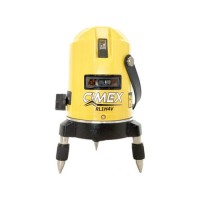
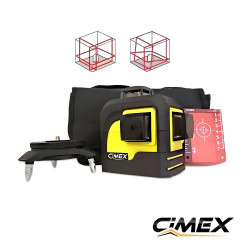
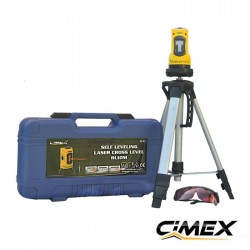
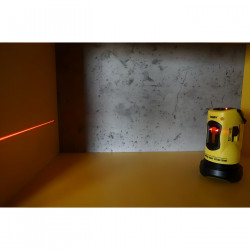
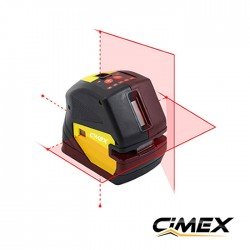
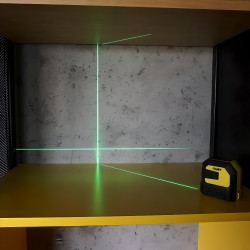
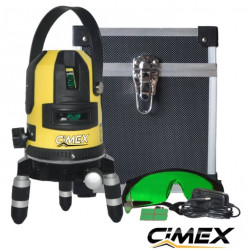
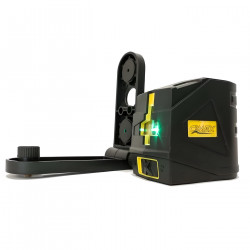
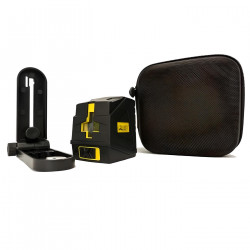
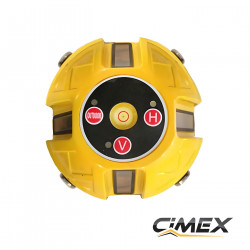
A self-levelling cross-line laser projects horizontal and vertical lines that meet at a right angle. It is a practical choice for shelving, wall cabinets, electrical fittings, door frames and tile starts in a room. CIMEX line models include options such as RL10M and green-beam 1H1V-G and SL10B-G. Check each product's line pattern, levelling range and stated accuracy: a model designed for short indoor runs should not be selected solely from a broad category-wide range figure.
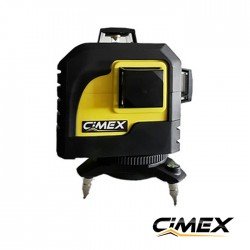
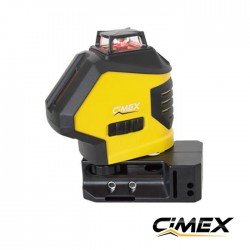
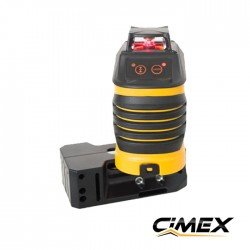
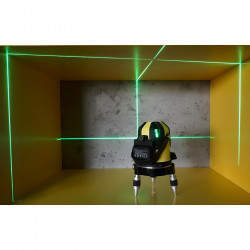
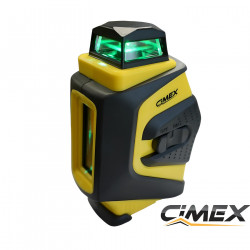
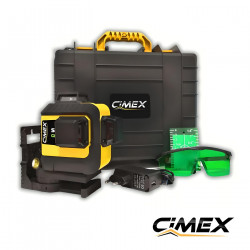
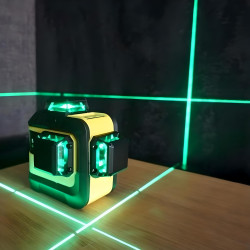
Multi-line and 3D laser levels project several planes around the instrument. Models such as CIMEX SL3D and SL3D-G can reduce the need to turn and re-position the tool when aligning partitions, ceiling grids, tiles or fixtures on several walls. Confirm the actual number of horizontal and vertical planes, beam colour, power source and mounting accessories on the individual listing. A 360-degree projection is useful for following a datum around a room, but it does not remove the need to check the instrument's placement and calibration.
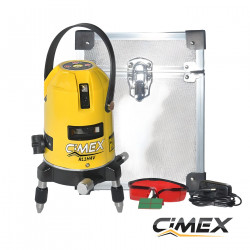
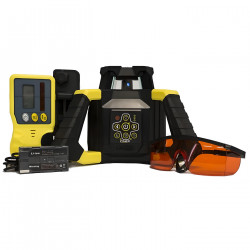
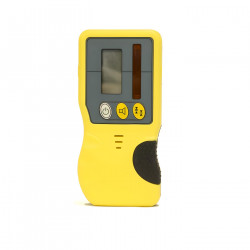
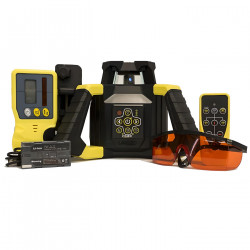
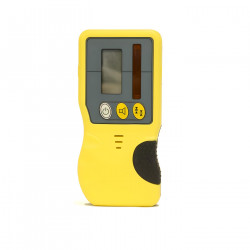
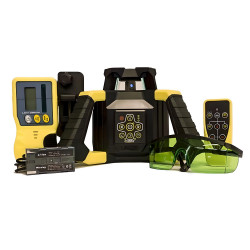
Rotary laser levels create a reference plane for larger rooms, site work and longer runs. The English catalogue lists CIMEX H500R, HV500R and HV500G rotary models. Their advertised long-distance figures may describe a working diameter with a compatible detector, while a product specification may state a radius. Compare like with like, and check whether a receiver, staff and tripod are included or must be ordered separately. Outdoors, a detector is often needed because the visible beam can be difficult to see in daylight.
Red or green beam, accuracy and working range
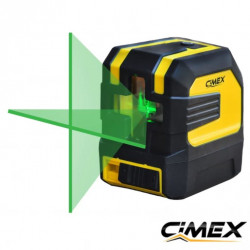
Green lines can be easier to see than red ones in many indoor conditions, but ambient light, surface colour and distance still affect visibility. Beam colour is not a substitute for checking the laser's stated accuracy, levelling tolerance and receiver compatibility. Read an accuracy specification at its stated test distance; small errors become more noticeable across a long wall or floor. The Bulgarian CIMEX category refers to an overall 10–600 m range across different laser instruments. That is a range for the assortment, not a promise that every line or rotary model reaches 600 m.
Before buying, consider the longest distance you must mark and the precision required by the installation. Cross-line and 3D tools suit repeated interior reference lines; rotary models with a receiver suit longer site measurements. If a level will be used for sloped work, verify that its manual supports the required grade or locked-line mode. For vertical layout, check whether it provides a plumb point or vertical plane. Choose the tool for the specific operation, then confirm its published specifications.
Mounting, setup and reliable results
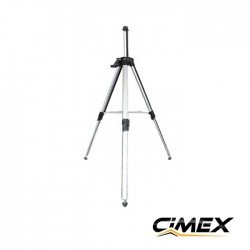
A stable support matters as much as the projection. The category includes tripods and magnetic brackets alongside laser levels. Check the mounting thread, height adjustment and fixing surface before selecting an accessory; 1/4-inch and 5/8-inch fittings are not interchangeable without a suitable adapter. Position the level where the lines remain clear of obstructions and where it cannot be knocked during work. Let a self-levelling instrument settle and respond to any out-of-level warning before marking.
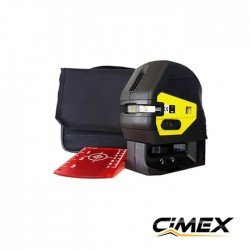
Make a reference mark and verify the line at several points, especially before fixing a long ceiling grid or a run of cabinets. Recheck after moving the tripod or bracket. Keep the lens clean, protect the instrument from impact and store it in its case when travelling. Use the laser class and safety instructions supplied with the specific model; do not look into the beam or aim it at others. The correct procedure and permitted conditions can differ between instruments.
Which CIMEX laser level should you compare?
For short indoor installation work, start with a self-levelling cross-line model. For several intersecting walls or full-room alignment, compare the SL3D family and other multi-plane levels. For longer-distance levelling, compare the H500R and HV500 rotary products together with detector and tripod requirements. Check each listing for projection pattern, accuracy, working distance, beam colour, battery or charger, and included accessories. This gives you a laser level that fits the job and avoids paying for range or functions you will not use.
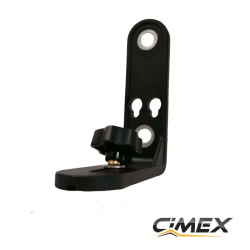
-250x250.png "Magnetic Bracket for Laser Level L-Grip Pro")
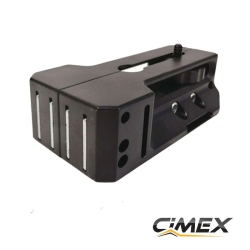
-250x250.png "Magnetic bracket for laser level with 1/4\" and 5/8\" thread")
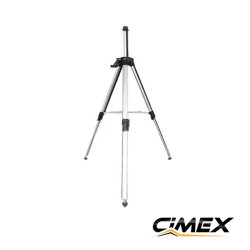
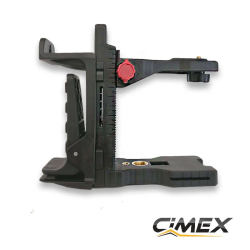
-250x250.png "Professional magnetic mount for laser devices with 1/4\" and 5/8\" threads")
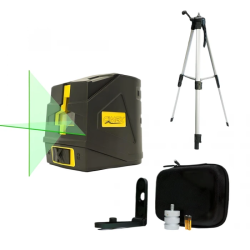
-250x250.jpg "PROMO PACKAGE! Linear Laser Level with Green Beam + Adapter + Measuring Equipment Tripod")
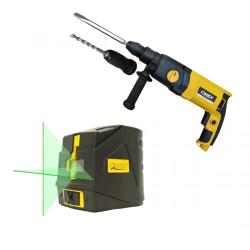
-250x250.jpg "PROMO PACKAGE! Rotary Hammer with Quick-Change Chuck 3 kg + Green Beam Line Laser Level")
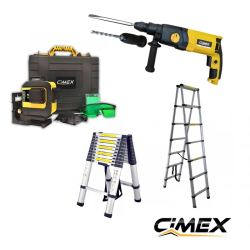
-250x250.png "PROMO PACK! Rotary hammer with quick-change chuck 3 kg + 3D laser level + Telescopic A-frame ladder")