


HDPE Pipe Butt Fusion Welding Machines
CIMEX pipe butt fusion welding machines join compatible thermoplastic pipes and fittings for water supply, gas distribution, drainage, irrigation and industrial pipework. The Bulgarian CIMEX category covers mechanical and hydraulic equipment for pipe diameters across the range of 40–450 mm. Individual machines cover narrower sizes, so match the model, reduction inserts and welding procedure to the actual pipe material, outside diameter and wall thickness before ordering.
How thermoplastic pipe butt fusion works
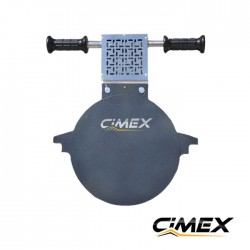
Butt fusion joins prepared pipe ends by heating and pressing them together under controlled conditions. The operator clamps and aligns the pipes, faces both ends with the cutter, checks the clean surfaces, heats them on a plate, removes the plate, then joins and holds the ends through the specified cooling period. A correctly prepared joint uses the pipe material itself; it does not need an adhesive or filler. PE and PE100 are common applications, while compatible PP and PVDF pipes are also listed for the CIMEX machines. Always follow the procedure for the specific material and pipe system.
Joint quality depends on alignment, clean faces, plate temperature, pressure and the heating, changeover and cooling times. These settings vary with material, diameter and wall thickness. The temperature controller’s possible range or a hydraulic unit’s maximum pressure is not a universal welding setting. Use the approved process table and the pipe manufacturer’s instructions rather than estimating parameters on site.
Mechanical and hydraulic CIMEX machines
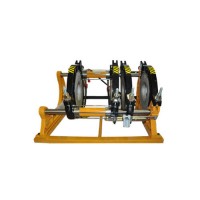
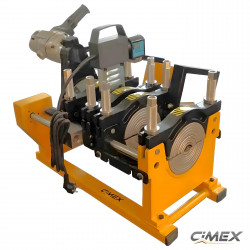
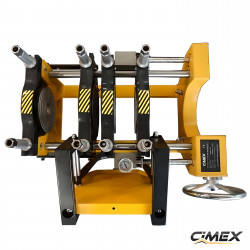
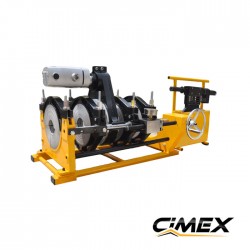
Mechanical butt fusion machines move and press the clamped pipes with a lever mechanism. The compact CIMEX PP160 is listed for 40–160 mm diameters and suits smaller installations and confined work areas. The PP250 extends the mechanical range to approximately 63–250 mm. Check the current product listing for the exact inserts supplied, since an overall diameter range does not mean every intermediate size is included.
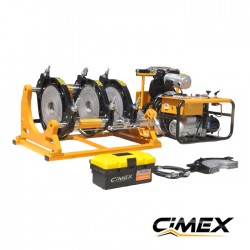
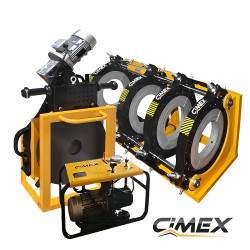
Hydraulic butt fusion machines use a separate power unit to move the jaws and control pressure. This arrangement helps when pipes are larger, heavier or welded repeatedly. The CIMEX HPP315 is listed for 90–315 mm pipes; the HPP450 covers larger diameters from 180–450 mm. These models include a base frame, facing tool, heating plate, hydraulic unit and size-specific reduction inserts according to their listings. A hydraulic drive improves control but does not replace trained operation or a correct welding schedule.
Choose a machine for the pipes and worksite
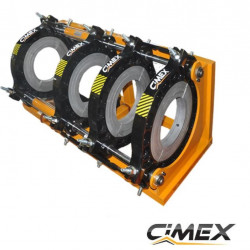
Start with the outside diameters you weld most often, the materials and the wall-thickness or SDR range. Confirm that suitable clamps and inserts are available for each size and that the pipe and fitting ends can be held squarely without excessive stress. An oversized machine may be harder to move into a trench or workshop bay, while an undersized one cannot safely clamp a larger pipe. Consider both today’s common sizes and realistic future work.
Check the electrical supply for the heater, facer and, on hydraulic models, the power unit. CIMEX listings show smaller machines with 220 V supplies and the HPP450 with 380 V supply; verify the exact model’s power requirement and local connection. If work is remote from mains electricity, size any generator for the equipment’s running and starting demand. Plan transport, lifting and pipe supports as well: heavy pipe sections need support outside the clamps to keep the joint aligned.
Prepare, weld and inspect with care
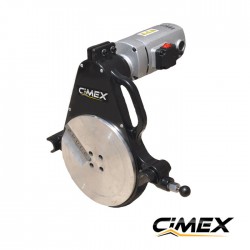
Before welding, confirm the pipe markings and compatibility, select the correct inserts, and inspect the heater coating, cutter blades, cables and hydraulic connections. Secure the frame on stable ground. Face the pipe ends fully, then keep machined surfaces free of dust, oil, moisture and hand contact. Check alignment and the required heater temperature before starting the timed cycle. Remove the heater promptly and join the pipe ends within the permitted changeover time; keep the assembly clamped until cooling is complete.
After cooling, inspect the bead for consistent shape around the circumference and signs of misalignment or contamination. Visual inspection is useful but cannot replace testing, records and acceptance checks required for a particular water or gas pipeline. Keep the heater on its stand to reduce burn risk, isolate the facer before cleaning it, and use suitable protective equipment. For trench work, provide safe access, adequate space and appropriate excavation support.
Maintenance and selection questions
Keep clamp faces and inserts clean, maintain sharp facing blades, inspect electrical leads and hydraulic hoses, and protect the heater’s non-stick surface from metal scrapers. Follow the machine manual for service and calibration checks. Good condition supports repeatable preparation and helps avoid reworking joints.
Which machine is suitable for PE100 pipe? Choose a model that supports its outside diameter and compatible inserts, then use the approved PE100 welding procedure for that pipe specification. Is hydraulic operation required? It is especially useful for larger or heavier pipes and frequent site welding; compact mechanical models may be suitable for smaller sizes. Compare the CIMEX PP and HPP listings to the job’s material, diameter, power supply and access requirements before choosing.
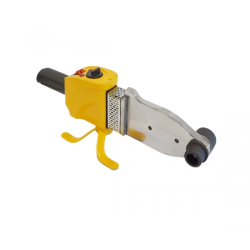
-250x250.png "Polypropylene Pipe Soldering Iron Ø20-Ø63, 2200W")
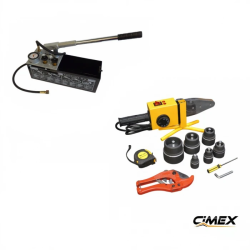
-250x250.jpg "Cimex Promo Kit for Testing and Soldering Plumbing Installations")