

Mini Dumpers for Construction, Farming and Landscaping
A mini dumper moves soil, sand, gravel, rubble, feed and other bulky materials over short distances where a wheelbarrow demands too much repeated manual effort and a larger machine cannot manoeuvre easily. CIMEX offers compact site dumpers for building work, gardens, farms, landscaping and access routes with limited space. The range includes wheeled 4×4, tracked, self-loading and battery-powered machines. These are different drive systems: a tracked mini dumper is not a four-wheel-drive vehicle, and the choice should follow the ground conditions and the way you load and discharge material.
Wheeled, tracked and electric mini dumpers
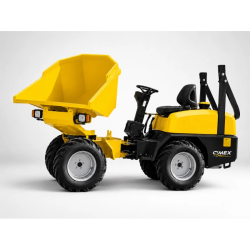
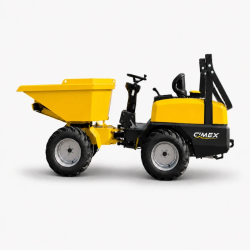
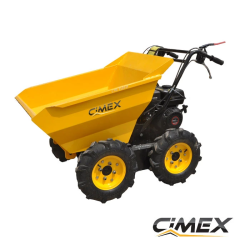
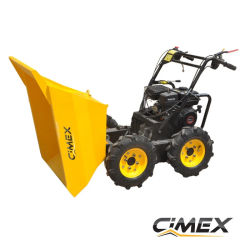
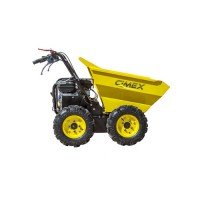
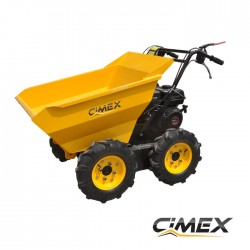
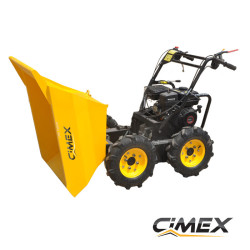
A wheeled 4×4 mini dumper is a practical option for firm or moderately uneven ground around yards, gardens and farms. The CIMEX WB300 is a compact 300 kg class example. Wheels can be convenient for regular trips on reasonably solid routes, but check ground clearance, tyre grip and the actual gradient limits of the machine before working on wet or steep ground. Four-wheel drive helps traction; it does not guarantee safe travel on every surface.
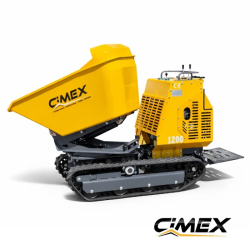
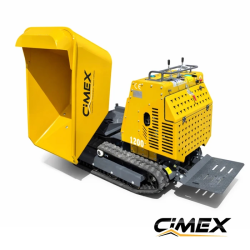
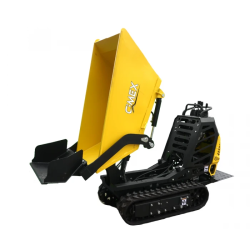
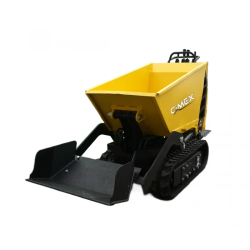
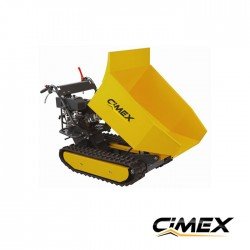
Tracked mini dumpers spread their weight across the tracks and provide traction on soft soil, mud, gravel and rough construction sites. The WB500 is a 500 kg tracked model with hydraulic tipping, while the WB-1200R is a heavier 1,200 kg tracked machine with a swivelling skip for more flexible discharge. A separate WB1300-R site dumper is also listed on CIMEX.com with a 1.3-ton rated load and swivelling skip. Compare each product's width, turning space, slope limits and discharge direction against the actual site. Tracks improve access on difficult ground but can still slip or damage finished surfaces.
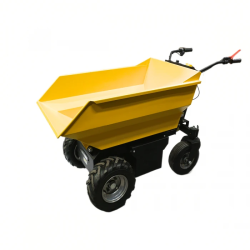
The battery-powered WB500EV offers a 500 kg load class and a hydraulically tipping skip. Its electric drive operates without local exhaust emissions, making it useful where engine fumes and noise would be especially undesirable, such as some greenhouses, farm buildings and covered work areas. The space still needs suitable ventilation and safe operating conditions. Check battery runtime, charging arrangements and the machine's permitted environment in its own specifications.
When self-loading or high tipping matters
If one operator repeatedly shovels loose material into the skip, a self-loading mechanism can reduce that part of the work. The tracked CIMEX WB500SL combines a 500 kg load class with self-loading equipment for soil, sand, aggregate and similar materials. The FLTD50 is another 500 kg self-loading tracked model; its high-lift discharge can help when unloading into a suitable trailer, container or vehicle. Confirm the receiving height, stability requirements and available overhead clearance for the specific model. Standard tipping is usually sufficient when another machine fills the skip or when material is discharged at ground level.
Choose capacity for the material and route
Start with the weight of a realistic load, not just the volume of the skip. Wet soil, stone and concrete can be much heavier than dry garden waste, and uneven loading affects balance. A 300 kg class machine may suit light yard or farm duties; 500 kg class models offer more capacity for regular construction or agricultural transport. Higher-capacity machines can reduce trips on larger sites, but they also need adequate passage width, ground bearing capacity and room to turn. Never exceed the rated load or assume that a higher stated maximum on a product listing is its normal working load.
Walk the intended route before choosing a machine. Measure gates, paths and ramps, note soft patches, cross slopes and obstructions, and identify a level discharge area. Consider whether the dumper will be loaded by hand, by a loader or with its own scoop. Also compare skip tipping method, travel speed, power source and access for servicing. The best configuration is the one that fits the whole work cycle, from loading through travel to safe unloading.
Operate and maintain the dumper safely
Keep bystanders clear, secure the route and follow the manufacturer's instructions for gradients, turning and tipping. Carry the load low and evenly distributed. Slow down before bends or rough ground; do not tip while travelling or on an unsuitable slope. Check tyres or tracks, brakes, controls and hydraulic hoses before use. For petrol machines, follow the fuel and ventilation instructions. For battery machines, use the specified charger and inspect electrical connections. Clean material from the running gear and tipping mechanism after work, and arrange service when a fault appears rather than operating a damaged machine.
Compare the CIMEX mini dumper listings for current model specifications, equipment and availability. If the route, load or unloading point is unusual, check those measurements against the individual product manual before ordering.
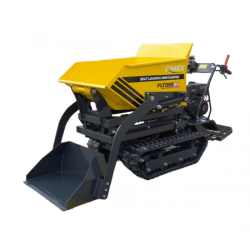
-250x250.jpeg "Self-loading tracked mini dumper 500 kg / CIMEX FLTD50")